12 Best Budget Phones Under $100 That Don’t Feel Cheap (2025)
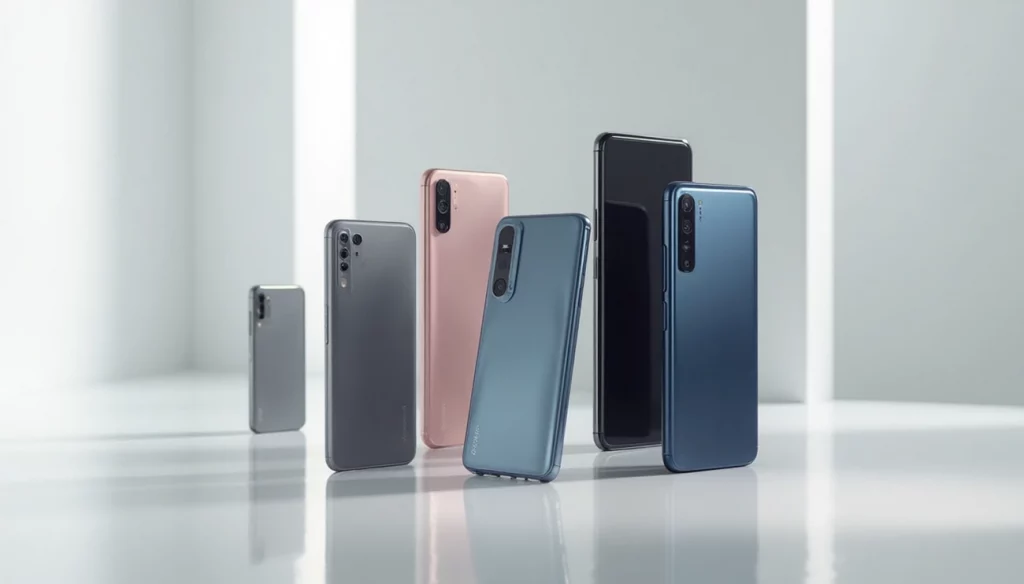
 Best budget phones don’t have to feel like a compromise anymore. Gone are the days when spending less than $100 meant suffering through laggy performance and frustratingly basic features.
Surprisingly, today’s affordable smartphones pack impressive specs that handle everyday tasks with ease. Despite their low price tags, many include decent cameras, respectable battery life, and even stylish designs that won’t make you feel self-conscious about your choice.
If you’re tired of flagship sticker shock or simply need a reliable backup device, we’ve tested dozens of options to find phones that deliver genuine value. From rugged workhorses to sleek touchscreens, our list includes something for every budget-conscious buyer.
Here are 12 smartphones under $100 that actually perform well in 2025 – no buyer’s remorse required.
NUU N10

Image Source: NUU Mobile
At just $89 on Amazon [1], the NUU N10 offers remarkable value among budget-friendly smartphones. This sleek device comes in two attractive finishes – Obsidian Black and Arctic White with zinc alloy accents [2].
NUU N10 specifications
The NUU N10 features a 6.6-inch HD+ display with a smooth 90Hz refresh rate [2]. Underneath, it’s powered by a 1.6GHz octa-core UNISOC T606 processor paired with 4GB RAM and 4GB extended RAM [1]. Storage is generous at 128GB, expandable via microSD card support up to 128GB [2].
For photography, the phone includes a 13MP autofocus main camera and 2MP macro lens with LED flash, complemented by a 5MP front camera [2]. The substantial 5000mAh battery easily lasts throughout a workday [2]. Additionally, the N10 runs on clean Android 14 with Google Gemini integration [1].
NUU N10 reasons to buy
The NUU N10 stands out primarily for its clean, bloatware-free Android experience [1]. Furthermore, the phone comes with everything needed right out of the box – protective case, charging adapter, and USB-C cable [2].
Battery life is particularly impressive, with the 5000mAh capacity providing enough power for full-day usage and evening activities [3]. The phone also retains features that flagship devices have abandoned, including:
- 3.5mm headphone jack
- MicroSD card slot for expanding storage
- Dual SIM functionality [2]
The AI-powered camera system can recognize 21 distinct types of objects and scenes, automatically optimizing settings for better photos [2]. Notably, the face unlock feature works surprisingly well for a budget device, unlocking almost immediately [1].
NUU N10 reasons to avoid
While impressive for its price point, the display doesn’t get bright enough, making outdoor usage challenging, especially in direct sunlight [2]. The bottom-firing speakers deliver poor audio quality that becomes almost completely muffled when held in landscape orientation [2].
Although generally responsive, the interface experiences noticeable lag with animations and app switching [1]. The camera quality, while serviceable in good lighting, produces noisy, grainy images in low-light situations [1].
Carrier compatibility is also limited – the N10 works with T-Mobile and related MVNOs but isn’t compatible with Verizon, AT&T, Cricket, or any CDMA carrier [1].
Xiaomi Redmi 13C

Image Source: Xiaomi
The Xiaomi Redmi 13C showcases a sleek, refined design at just 8.09mm thin, offering surprising quality in the under-$100 segment. Priced around $124 [4], this budget contender delivers a modern esthetic that belies its affordable price point.
Xiaomi Redmi 13C specifications
The Redmi 13C features a 6.74-inch IPS LCD display with a 90Hz refresh rate and 600 nits peak brightness [5]. Powering the device is the MediaTek Helio G85 processor (12nm) with an octa-core configuration—two Cortex-A75 cores at 2.0GHz and six Cortex-A55 cores at 1.8GHz [5].
Memory configurations include 4GB/128GB, 6GB/128GB, and 8GB/256GB options with expandable storage via a dedicated microSD slot supporting up to 1TB [5]. The camera system consists of a 50MP main sensor (f/1.8) paired with a 2MP macro lens, plus an 8MP front camera [5]. A substantial 5000mAh battery powers the device with 18W charging support, though only a 10W charger comes in the box [5].
Additional features include:
- Side-mounted fingerprint sensor
- 3.5mm headphone jack
- USB-C port (upgraded from predecessor’s microUSB)
- Bluetooth 5.3 connectivity
- NFC support (market dependent)
Xiaomi Redmi 13C reasons to buy
The phone stands out for its impressive design that appears more premium than its price suggests [4]. Its 90Hz refresh rate delivers smooth scrolling and animations, uncommon at this price point [4]. Battery life is quite good, with up to 23 hours of video streaming claimed [5].
Storage options are generous—up to 256GB internal plus 1TB expandable—providing ample space for apps and media [4]. The clean Android 13 experience with MIUI 14 offers numerous customization options, subsequently making the phone feel more personal [4].
Xiaomi Redmi 13C reasons to avoid
Camera performance remains mediocre, producing acceptable photos in daylight but poor results in low light, with noticeable noise and lack of detail [6]. The charging speed is disappointingly slow, taking nearly two hours to fully charge [6].
Performance limitations become evident during demanding tasks, with occasional stutters during multitasking [6]. The display, regardless of its smooth refresh rate, suffers from viewing angle issues and color inaccuracies [4]. Finally, the mono speaker delivers poor audio quality that leaves much to be desired [4].
BLU G33

Image Source: Amazon.com
Priced at just $60 [7], the BLU G33 enters the budget smartphone arena with a distinctive bulky design that prioritizes durability over sleekness. This affordable handset offers essential smartphone capabilities without demanding a significant investment.
BLU G33 specifications
The BLU G33 features a 6.26-inch IPS LCD display with a resolution of 480 x 960 pixels [7], resulting in a modest 171 ppi density. Weighing in at 215g [7], the phone is noticeably heavier than many competitors. Under the hood, it runs on an octa-core 1.6 GHz Cortex-A55 processor [2] paired with either 2GB or 3GB of RAM [8].
Storage options include either 16GB or 32GB [8], expandable via microSD card support up to 128GB [2]. The camera system consists of a basic 5MP main sensor with f/2.0 aperture [2] and a secondary 0.3MP lens, complemented by a 5MP front camera for selfies. All cameras can record video at 1080p@30fps [2].
Powering the device is a removable 3000mAh Li-Ion battery [7], a rarity in modern smartphones. The BLU G33 runs Android 13 Go edition [7], specifically optimized for low-resource devices. Connectivity options include 4G LTE, Wi-Fi, Bluetooth 4.2, and USB Type-C [7].
BLU G33 reasons to buy
The BLU G33 stands out primarily for its affordability, making smartphone technology accessible to those on tight budgets. Moreover, the removable battery design allows for easy replacement, potentially extending the device’s lifespan.
The phone comes complete with accessories right in the box, including a clear TPU case and pre-installed screen protector [2], saving buyers additional accessory costs. Indeed, the dual SIM functionality [2] provides flexibility for users managing multiple phone lines.
Android 13 Go edition ensures a clean interface optimized for lower-end hardware, delivering essential smartphone functions without unnecessary bloat. The curved glass display adds a touch of elegance to this budget device [7].
BLU G33 reasons to avoid
Performance is undeniably sluggish, with users reporting typing lag and choppy animations [2]. Storage limitations are significant – the 16GB option leaves minimal usable space after system files [2].
Camera quality is substantially below average, producing grainy, low-resolution images even in good lighting conditions [2]. Correspondingly, the display resolution is quite low by today’s standards, making text and images appear less sharp.
The hefty weight makes the phone uncomfortable for extended use [2]. Overall, while the BLU G33 provides basic smartphone functionality, its performance limitations require patience from users wanting anything beyond the most elementary tasks [2].
Cat S22 Flip

Image Source: Android Community
Unlike conventional budget smartphones, the Cat S22 Flip brings a rugged flip phone design to those seeking durability above all else. Exclusively available from T-Mobile for around $234 [9], this unique device combines nostalgic form factor with modern functionality.
Cat S22 Flip specifications
The Cat S22 Flip features a 2.8-inch TFT LCD touchscreen with 480 x 640 resolution [3] protected by Corning Gorilla Glass 5. Additionally, a 1.44-inch external display shows notifications and basic information [9]. Powering the device is a Qualcomm Snapdragon 215 quad-core processor clocked at 1.3GHz [3] paired with 2GB RAM and 16GB internal storage, expandable via microSD [9].
For photography, the phone includes a basic 5MP rear camera and 2MP front camera, both capable of 1080p video recording [9]. The removable 2000mAh battery [3] provides approximately 12 hours of talk time [3]. Connectivity options include 4G LTE, Wi-Fi 802.11 b/g/n, Bluetooth 4.2, and USB Type-C [3].
Most impressively, the device boasts IP68 dust/water resistance, surviving submersion up to 5 feet for 35 minutes [9]. It’s also MIL-STD-810H compliant, withstanding drops of up to 6 feet onto steel [9].
Cat S22 Flip reasons to buy
The primary advantage is extraordinary durability – this phone functions reliably in harsh environments where typical smartphones would fail. Hence, it’s ideal for construction workers, first responders, or outdoor enthusiasts [10].
Physical buttons provide excellent tactile feedback and can be operated while wearing gloves [10]. The programmable PTT (push-to-talk) button allows quick access to frequently used functions [9]. Furthermore, the flip mechanism creates a satisfying sound and feels sturdy [10].
The device supports MDM (Mobile Device Management) and EMM (Enterprise Mobility Management), making it attractive for IT departments equipping workers in challenging environments [1]. The loud speaker ensures calls remain audible even in noisy surroundings [1].
Cat S22 Flip reasons to avoid
The bulky design is a significant drawback – at 23mm thick and weighing 224g [3], it’s substantially heavier than typical smartphones. Battery life, meanwhile, is merely adequate rather than exceptional, often requiring charging every two days [1].
Camera quality is mediocre, with photos lacking detail despite acceptable color accuracy [1]. The phone lacks NFC, eliminating contactless payment capabilities [1].
Essentially, the interface can be frustrating – despite having physical buttons, many functions still require touchscreen interaction, creating an occasionally awkward user experience [11].
TCL 30 Z

Image Source: TCL
Offering essential smartphone features for just $90 [12], the TCL 30 Z delivers reliable performance in a simple package. This budget-friendly option balances basic functionality with a decent display, making it suitable for users with minimal requirements.
TCL 30 Z specifications
The TCL 30 Z features a 6.08-inch IPS LCD display with HD+ resolution (720 x 1560 pixels) [5]. Powered by a MediaTek Helio A22 quad-core processor running at 2.0 GHz [5], the device includes 3GB of RAM paired with 32GB of internal storage, expandable up to 512GB via microSD card [5].
For photography, the phone includes an 8MP rear camera and a 5MP front-facing camera [5], both capable of recording 1080p video at 30fps [5]. A 3000mAh Li-Polymer battery provides approximately 12.5 hours of usage time and up to 25 days of standby [5].
Measuring 156.2 x 73.8 x 9.9 mm and weighing 182g [5], the device runs Android 12 with TCL’s interface. Connectivity options include 4G LTE, Bluetooth 4.2, and Wi-Fi 802.11 b/g/n [5], though it still uses a micro-USB port rather than USB-C [5].
TCL 30 Z reasons to buy
The TCL 30 Z boasts impressive battery endurance considering its 3000mAh capacity, easily lasting a full day on a single charge [13]. The display, enhanced by NXTVISION technology, reduces eye strain while improving visual quality for videos and games [14].
Face unlock provides convenient security without requiring a fingerprint sensor [14]. Furthermore, the device supports Wi-Fi hotspot functionality for up to 10 connected devices [14], making it versatile for sharing internet connections.
The clean Android 12 implementation runs reasonably well due to its lightweight nature, particularly when using the Android Go optimized apps [13]. Additionally, the expandable storage option helps overcome the limited internal capacity.
TCL 30 Z reasons to avoid
Performance issues become apparent with demanding applications, resulting in noticeable lag during typing and animations [13]. The screen’s limited brightness makes outdoor visibility challenging, particularly in direct sunlight [13].
The device’s 32GB storage quickly fills with apps since many cannot be moved to the SD card [13]. Similarly, the phone cannot connect to 5GHz Wi-Fi networks, limiting connection speeds [13].
Camera quality falls short of expectations even for its price range, with the 8MP rear sensor producing mediocre results [13]. Consequently, the haptic feedback feels unrefined with no option to adjust its intensity [13]. Lastly, the outdated micro-USB port seems anachronistic when most current devices have transitioned to USB-C [12].
UMIDIGI G9T
Image Source: UMIDIGI
With an ultra-slim 7.9mm profile, the UMIDIGI G9T stands out as a svelte contender in the budget smartphone market. Priced at approximately $120 [15], this lightweight device balances modest performance with impressive battery life for price-conscious buyers.
UMIDIGI G9T specifications
The UMIDIGI G9T features a 6.75-inch IPS LCD display with a 90Hz refresh rate and 720 x 1600 resolution (260 ppi) [4]. Powered by the UNISOC T606 chipset built on a 12nm process, it utilizes an octa-core CPU with two Cortex-A75 cores and six Cortex-A55 cores, all clocked at 1.6GHz [16]. For multitasking, the phone offers 4GB physical RAM plus 4GB extended virtual memory alongside 128GB internal storage, expandable via microSD card [17].
The camera system includes a 13MP main sensor with f/1.8 aperture, complemented by a 2MP depth camera for portrait effects [17]. For selfies, there’s an 8MP front-facing camera [6]. A substantial 5000mAh battery provides impressive endurance—up to 47 hours of music playback, 40 hours of calls, or 14 hours of WhatsApp usage [17]. The phone supports 18W fast charging, though it ships with a standard 10W charger [6].
Measuring 167.2 x 77 x 7.9mm and weighing just 189g [4], the G9T runs Android 14 and offers a side-mounted fingerprint sensor plus AI face unlock capabilities [6].
UMIDIGI G9T reasons to buy
First, the featherlight design makes the G9T comfortable for extended use. The 90Hz refresh rate delivers smoother scrolling and animations than typical budget phones [17]. In particular, the eye-care display technology reduces harmful blue light, making it easier on your eyes during lengthy usage sessions [17].
Battery life is undoubtedly the standout feature, providing genuinely all-day usage without anxiety. For instance, the phone undergoes rigorous 48-month anti-aging smoothness tests to ensure consistent performance over four years [17].
Obviously, the dual unlock methods (fingerprint and face recognition) provide convenient security options. In addition to these features, the device includes FM radio functionality and a 3.5mm headphone jack, both increasingly rare in modern smartphones [6].
UMIDIGI G9T reasons to avoid
Even though the T606 processor handles basic tasks adequately, it struggles with demanding applications and games [18]. The display resolution (720 x 1600) falls below full HD standards, resulting in less crisp text and images [19].
Camera performance remains mediocre, typically producing acceptable photos in good lighting but struggling in challenging conditions [18]. Naturally, the inclusion of a 10W charger instead of the full 18W supported charging speed means slower recharging times [6].
The phone lacks NFC capability, therefore eliminating contactless payment options [4]. Ultimately, the virtual proximity sensor might not function as reliably as traditional sensors found in more expensive devices [4].
Moto G04

Image Source: PhoneArena
Motorola delivers surprising sturdiness with the Moto G04, a well-constructed budget phone that defies its affordable price point. Retailing for around $130 [7], this device combines a sturdy build with an elegant design that includes a slightly glittery matte finish plastic back that resists fingerprints [7].
Moto G04 specifications
The Moto G04 features a 6.56-inch IPS LCD display with 90Hz refresh rate and 720 x 1612 pixel resolution [20]. Powered by the Unisoc T606 chipset built on a 12nm process, it utilizes an octa-core CPU configuration with two Cortex-A75 cores and six Cortex-A55 cores, all clocked at 1.6GHz [20]. Memory options include 4GB RAM with either 64GB or 128GB storage, plus a variant with 8GB RAM and 128GB storage [7].
For photography, the phone includes a single 16MP rear camera with f/2.2 aperture [20] and a 5MP front camera [20]. A substantial 5000mAh battery powers the device, delivering over 15 hours in WLAN testing [7]. Yet, the included 10W charger falls short of the phone’s 15W charging capability, extending charging time significantly [7].
Moto G04 reasons to buy
The build quality stands out immediately—the device resists pressure and twisting without creaking [7]. In effect, the phone includes several premium features uncommon at this price:
- Water-repellent design protecting against spills and splashes [21]
- Side-mounted fingerprint sensor that unlocks quickly and reliably [7]
- Facial recognition that functions even in low light [7]
- Clean Android 14 experience with promised security updates until January 2026 [7]
The UFS 2.2 flash storage provides faster speeds than typically found in this price range [7]. Accordingly, the Moto G04 offers Dolby Atmos support for enhanced audio experience [21].
Moto G04 reasons to avoid
Primarily, the processor performance leaves much to be desired, causing stutters and longer waiting times in everyday use [7]. The display’s maximum brightness of 396 cd/m² makes outdoor visibility challenging, as reflections often obscure screen content [7].
The WiFi performance falls below expectations, with the device only reaching WiFi 4 speeds despite supporting WiFi 5 [7]. In terms of photography, the camera produces merely decent photos in good lighting but struggles significantly in low-light conditions [7].
Samsung Galaxy A15 4G

Image Source: Samsung
The Samsung Galaxy A15 4G elevates the budget phone experience with its vibrant Super AMOLED display and promised software longevity. Priced around €190 [2], this affordable smartphone offers a balanced package of features that outperforms many competitors in the same price bracket.
Samsung Galaxy A15 4G specifications
The Galaxy A15 4G features a 6.5-inch Super AMOLED display with 1080 x 2340 (FHD+) resolution and smooth 90Hz refresh rate [22]. Under the hood, it’s powered by the MediaTek Helio G99 chipset (6nm) with an octa-core configuration—two Cortex-A76 cores at 2.2GHz alongside six Cortex-A55 cores at 2.0GHz [8]. Memory options vary from 4GB/128GB to 8GB/256GB, coupled with microSD expansion up to 1TB [8].
Photography capabilities include a triple rear camera setup: 50MP main (f/1.8), 5MP ultrawide (f/2.2), and 2MP macro (f/2.4), plus a 13MP (f/2.0) front camera [8]. A substantial 5000mAh battery powers the device with 25W fast charging support [22]. The phone runs Android 14 with One UI 6 and measures 160.1 x 76.8 x 8.4mm while weighing 200g [8].
Samsung Galaxy A15 4G reasons to buy
Primarily, the bright and smooth AMOLED screen sets this phone apart from budget competitors, delivering vibrant colors and excellent clarity [2]. Battery life is remarkably strong, easily lasting throughout a full day of use [2]. Granted, the latest Android 14 with One UI 6 provides a clean, responsive interface without compromising on features [23].
Nonetheless, Samsung’s commitment to providing three major Android updates [2] and up to five years of security maintenance [24] ensures impressive longevity. The camera system performs admirably in daylight conditions, capturing dependable photos [2].
Samsung Galaxy A15 4G reasons to avoid
The device lacks any form of ingress protection, making it vulnerable to water and dust damage [23]. Sound quality from the mono speaker is merely adequate [2]. Alternatively, the virtual proximity sensor may not function as reliably as traditional sensors [23].
Video recording suffers from the absence of stabilization [2], certainly a consideration for those capturing footage regularly. Worth noting, the phone doesn’t include a charger in the box [2], requiring an additional purchase for optimal charging speeds.
Nokia G22

Image Source: Notebookcheck
Pioneering a new approach to smartphone sustainability, the Nokia G22 stands out as the only user-repairable budget phone on our list, priced at approximately $150 [25]. This innovative device empowers owners to replace broken displays, charging ports, and batteries without voiding the warranty [26].
Nokia G22 specifications
The Nokia G22 features a 6.5-inch IPS LCD display with 720 x 1600 pixel resolution and 90Hz refresh rate, protected by Corning Gorilla Glass 3 [27]. Powering the device is the Unisoc T606 chipset (12nm) with an octa-core configuration—two Cortex-A75 cores and six Cortex-A55 cores, all clocked at 1.6GHz [28]. Memory options include 4GB RAM with either 64GB or 128GB storage, plus microSD expansion up to 2TB [29].
For photography, the phone includes a triple rear camera setup: 50MP main (f/1.8), 2MP macro, and 2MP depth sensor, alongside an 8MP front-facing camera [27]. A substantial 5050mAh battery provides impressive endurance—up to 72 hours in real-world testing [9]. The device runs Android 12 and measures 165 x 76.2 x 8.5mm while weighing 196g [27].
Nokia G22 reasons to buy
First, the groundbreaking QuickFix repairability lets users replace components themselves using iFixit guides and affordable parts—a battery replacement costs just £22.99 [9]. Plus, the phone’s back cover is made from 100% recycled plastic [3], aligning with environmentally conscious values.
Battery life is remarkably strong, delivering three full days of use on a single charge [26]. Even more impressive, HMD (makers of Nokia phones) rates the battery to maintain at least 80% capacity for a minimum of 800 charge cycles [9].
The clean, bloatware-free Android experience provides a user-friendly interface [30]. Simultaneously, the device offers IP52 dust and splash resistance that isn’t compromised by DIY repairs [29].
Nokia G22 reasons to avoid
Primarily, the processor performance is sluggish by any measure, causing noticeable lag when opening apps [9]. The display, yet functional with decent brightness of 641 cd/m² [31], has a relatively low resolution resulting in just 270 ppi density [27].
Furthermore, the phone ships with Android 12 instead of the newer Android 13, receiving only two years of OS updates [29]. Under those circumstances, the three-year security update promise [26] feels inadequate for a device marketed for longevity.
The device also experiences significant heating under load [31]. Ultimately, the camera performance is uninspiring, with image quality deteriorating rapidly in anything less than optimal lighting [3].
TCL Flip 2

Image Source: TCL
For those seeking simplicity in a smartphone-dominated world, the TCL Flip 2 offers a back-to-basics approach with modern touches. Priced at $79.99 [32], this feature phone combines reliable voice calling with just enough smart functionality to stay connected.
TCL Flip 2 specifications
The TCL Flip 2 features a 2.8-inch internal LCD with 320×240 resolution [1] and a small 1.44-inch external display for notifications [10]. Powered by a MediaTek 6739-CH processor running at 1.5GHz [10], it comes with 1GB RAM and 8GB internal storage [1], expandable via microSD card up to 128GB [10].
Measuring 4.22 x 2.19 x 0.78 inches when closed [10] and weighing 4.93 ounces [1], this compact device houses a basic 2MP camera [1] and a removable 1850mAh battery delivering up to 14 hours of talk time [10]. Connectivity options include 4G LTE, Wi-Fi 4, Bluetooth 4.2, and USB-C [11].
TCL Flip 2 reasons to buy
Firstly, call quality stands out as remarkably crisp and free of static, with the earpiece reaching 75.6dB and speakerphone hitting 87.6dB [11]. The dedicated Quick Dial button allows instant access to programmed numbers even when the phone is closed [11], making emergency calling fast and simple [33].
The TCL Flip 2 excels in accessibility features, with adjustable text size, screen colors, and a user-friendly interface designed for those who find smartphones overwhelming [34]. Fortunately, the phone includes M4/T4 hearing aid compatibility [10], further enhancing its accessibility.
Battery endurance is another strength, as the device lasted eight hours of mixed use before dropping to 50% [11], making it reliable for daily use without constant recharging.
TCL Flip 2 reasons to avoid
Primarily, the camera quality is disappointing, struggling to take decent photos even in bright light [11]. The phone lacks an official IP rating, meaning it should be kept away from water and dust [11].
Unlike some competitors, the TCL Flip 2 doesn’t allow downloading additional apps [33], limiting functionality to pre-installed software. The plastic construction feels somewhat slippery [33], potentially affecting grip.
Navigating web content with the directional pad proves tedious [11], making internet browsing practical only for basic tasks. The 2MP camera records video at just 480p/30fps [11], producing footage that’s mediocre at best.
Nuu N20
Image Source: Techaeris
Priced competitively at $125, the Nuu N20 delivers a clean Android experience with surprisingly capable hardware for entry-level smartphone users. This budget-friendly device strikes a balance between performance and affordability without compromising on essentials.
Nuu N20 specifications
The Nuu N20 features a 6.6-inch HD+ display with 1600 x 720 resolution and smooth 90Hz refresh rate [5]. Powering the device is a 1.6GHz octa-core processor paired with 6GB RAM plus 6GB extended RAM [35]. Storage is generous at 128GB, expandable via microSD card up to 128GB [35].
Photography capabilities include a 16MP main camera and 8MP wide-angle lens with LED flash, complemented by a 5MP front camera [5]. A substantial 5000mAh battery ensures all-day usage [5]. The phone runs on a bloatware-free version of Android 14 [12]. Connectivity options include WiFi 802.11 a/b/g/n/ac (2.4GHz/5GHz), Bluetooth 5.0, and USB Type-C [35].
Nuu N20 reasons to buy
Primarily, the N20 runs a clean build of Android 14 with zero bloatware – the only pre-installed app is NUU Help [12]. The device arrives with thoughtful extras including a pre-installed screen protector and clear rubber case right out of the box [12].
The phone supports AI-enabled applications like ChatGPT and Gemini thanks to its Unisoc T606 chipset with entry-level AI capabilities [12]. Battery life proves reliable for full-day usage with the 5000mAh capacity [14]. Convenient security features include both facial recognition and a side-mounted fingerprint sensor [36].
Nuu N20 reasons to avoid
Altogether, the processor performance remains basic – handling everyday tasks adequately but struggling with demanding applications [12]. The GPU ranks fairly low with the Imagination PowerVR GE8322 running at 550MHz, making higher-resolution gaming sluggish [12].
Notwithstanding its 90Hz refresh rate, some users report the display doesn’t get bright enough for comfortable outdoor viewing [37]. The cameras, typically sufficient for casual content, won’t impress photography enthusiasts with their limited capabilities in challenging lighting conditions [14].
Samsung Galaxy A16 5G

Image Source: Buy Samsung Galaxy A16 5G Phones for Your Business | Samsung Business
Samsung’s commitment to budget excellence culminates in the Galaxy A16 5G, offering six years of updates alongside premium features at just $199.99 [38]. This forward-thinking approach ensures long-term value while maintaining essential functionality.
Samsung Galaxy A16 5G specifications
The Galaxy A16 5G boasts a 6.7-inch Super AMOLED display with 1080 x 2340 resolution and smooth 90Hz refresh rate [13]. Beneath the surface runs Samsung’s Exynos 1330 chipset with an octa-core configuration—two 2.4GHz Cortex-A78 cores paired with six 2.0GHz Cortex-A55 cores [39]. Memory configurations include 4GB/128GB, 6GB/128GB, and 8GB RAM with either 128GB or 256GB storage, plus microSD expansion up to 1.5TB [13].
The triple rear camera system features a 50MP main sensor (f/1.8), 5MP ultrawide (f/2.2), and 2MP macro lens (f/2.4), complemented by a 13MP front camera [13]. A robust 5000mAh battery powers the device with 25W fast charging support, fully charging in approximately 95 minutes [40].
With attention to durability, the phone offers IP54 water and dust resistance [40], along with a slimmer 7.9mm profile [13] that enhances its premium feel.
Samsung Galaxy A16 5G reasons to buy
In reality, the standout feature is Samsung’s extraordinary software commitment—six years of OS upgrades and security updates through October 2030 [13]. For the most part, this ensures your investment remains current longer than any competitor in this price range.
The expansive 6.7-inch display delivers an immersive viewing experience with minimized bezels [40], providing excellent clarity and vibrant colors. Equally important, the 5000mAh battery offers reliable all-day performance even with heavy usage [40].
Samsung Knox Vault provides hardware-level security isolation for passwords and sensitive information [41], a feature typically reserved for more expensive devices.
Samsung Galaxy A16 5G reasons to avoid
Primarily, performance limitations become apparent during demanding tasks, with occasional stutters during multitasking [42]. In addition to this, the device ships with Android 14 rather than the newest Android 15 [40].
The included camera system, while versatile on paper, struggles in challenging lighting conditions [43]. At this price point, faster charging technology might have been expected, as the current implementation takes over 90 minutes for a full charge [43].
Conclusion
Budget smartphones have undoubtedly evolved beyond their previously limited capabilities. Throughout our review of these 12 devices under $100, several clear patterns emerged that demonstrate the remarkable progress in this segment.
Battery life stands out as a significant strength across most budget offerings. Models like the UMIDIGI G9T and Nokia G22 deliver multi-day endurance from their 5000mAh batteries, proving affordability need not sacrifice longevity.
Clean software experiences represent another welcome trend. Brands such as NUU and Motorola offer near-stock Android implementations without bloatware, ensuring smoother performance despite modest hardware specifications.
Camera capabilities, however, remain the most obvious compromise at this price point. Even phones with seemingly impressive camera specifications struggle in challenging lighting conditions. Nevertheless, most deliver acceptable results for basic social media sharing when shooting in good light.
Durability varies significantly across these budget options. The Cat S22 Flip and Nokia G22 specifically cater to users needing resilience, with the latter’s user-repairability setting a new standard for sustainable smartphones regardless of price.
Processor performance presents the most consistent limitation throughout these devices. Basic tasks run adequately on all reviewed phones, but users should maintain realistic expectations about multitasking capabilities and gaming performance.
Surprisingly, several manufacturers now offer extended software support even for budget devices. Samsung leads this charge with an impressive six years of updates for the Galaxy A16 5G, though admittedly at the higher end of our budget range.
When selecting your ideal budget phone, consider prioritizing features most essential to your usage patterns rather than seeking the perfect all-rounder. Some excel at battery life while others offer superior displays or build quality. Therefore, matching these strengths to your specific needs will yield the most satisfying experience.
The days of truly terrible budget phones certainly appear behind us. Though flagship devices maintain their considerable advantages, these affordable alternatives demonstrate that smartphone essentials have become accessible to virtually everyone. Undoubtedly, the gap between premium and budget experiences continues to narrow with each generation.